Your team is already using AI at work. We ask the question of how many of them feel comfortable talking about it.
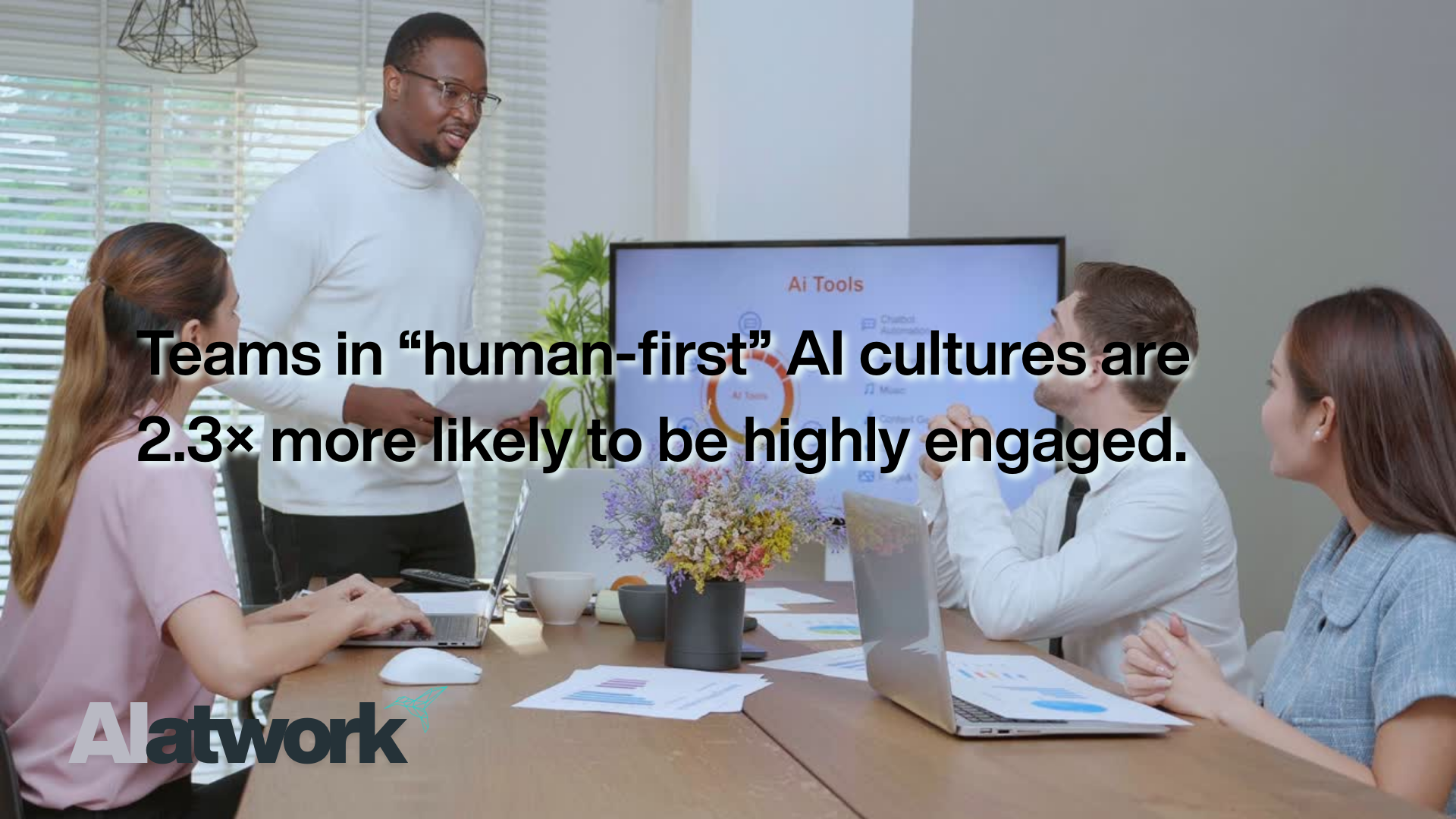
Gartner's 2025 workplace research found that organisations taking a human-first approach to AI see employees who are 1.5 times more likely to be high performers and 2.3 times more likely to be highly engaged. The secrecy around AI use at work is costing businesses more than they realise, and quite unnecessary.

People use AI in private because they are unsure if it is acceptable. Or because they think it might look like cheating. Or because no one else has admitted to using it yet, so staying quiet feels safer. It could also be due to the fear of team members thinking they are incompetent in their work.
While all the inner conflict takes place, best practices never come forward. Mistakes get repeated. One person figures out a better way to structure prompts or validate outputs, and that knowledge never travels beyond their desk.
We hear about this in client sessions all the time.
What the data shows about AI in the workplace
The gap between AI adoption and AI impact is widening. McKinsey's 2025 State of AI report surveyed nearly 2,000 participants across 105 countries.
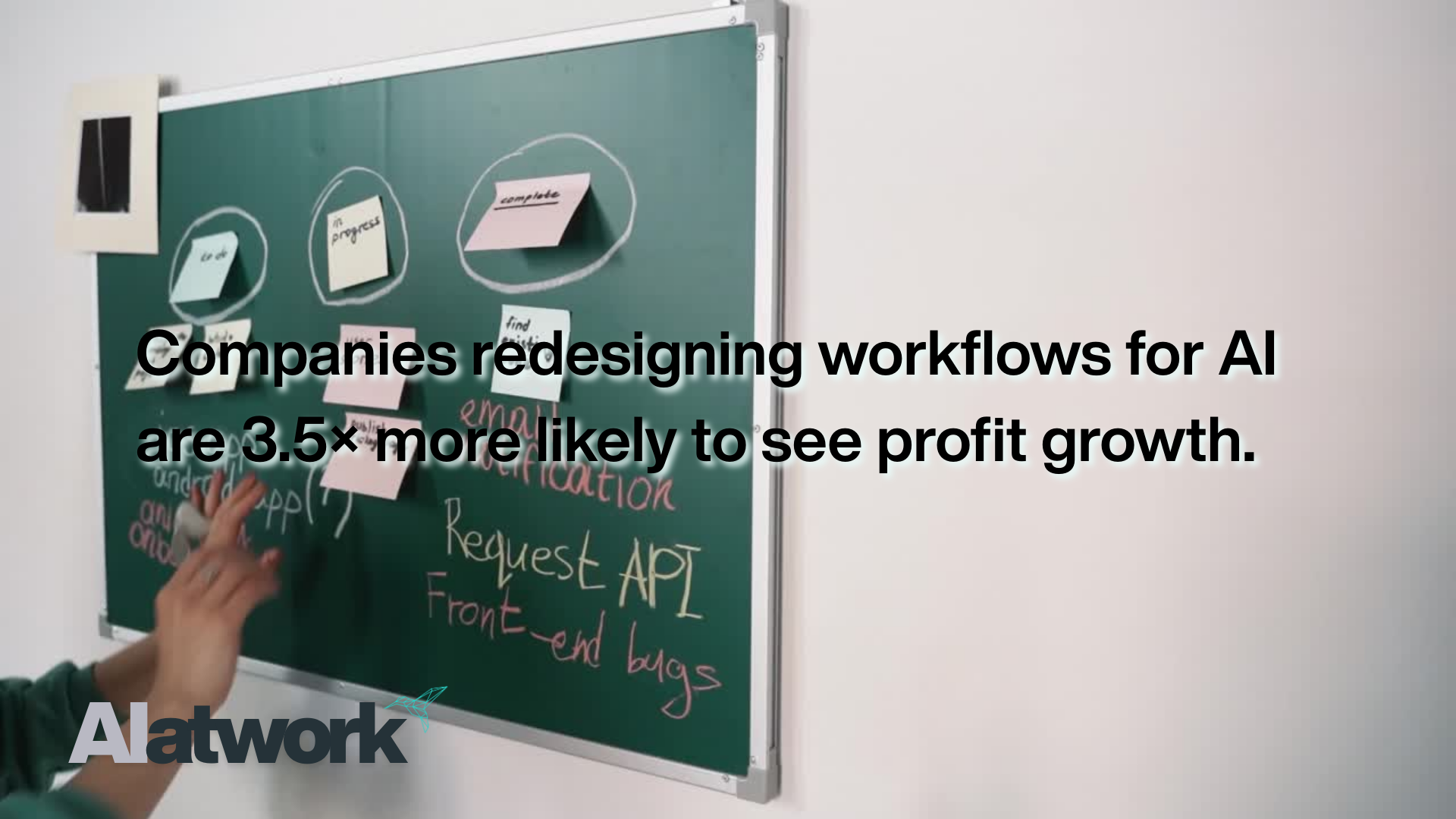
Their finding: 88% of organisations now use AI regularly, but only one-third have scaled it beyond pilots. The organisations seeing real value are the ones redesigning workflows instead of just adding tools.
Speed is no longer a differentiator when everyone has access to the same tools. AI can surface patterns in data, generate process maps, draft proposals, and summarise reports. It cannot tell you if the pattern matters for your client. Or if the process fits how your team operates. Or if the tone is right for the situation, the audience, the company culture. This is the make or break of your success.
What separates good work from mediocre work is the ability to evaluate, refine, and apply context. To know when the AI output is useful and when it is just plausible-sounding filler. To understand which details matter and which can be discarded.
The productivity question
AI was supposed to save us time. So why does everyone feel busier?
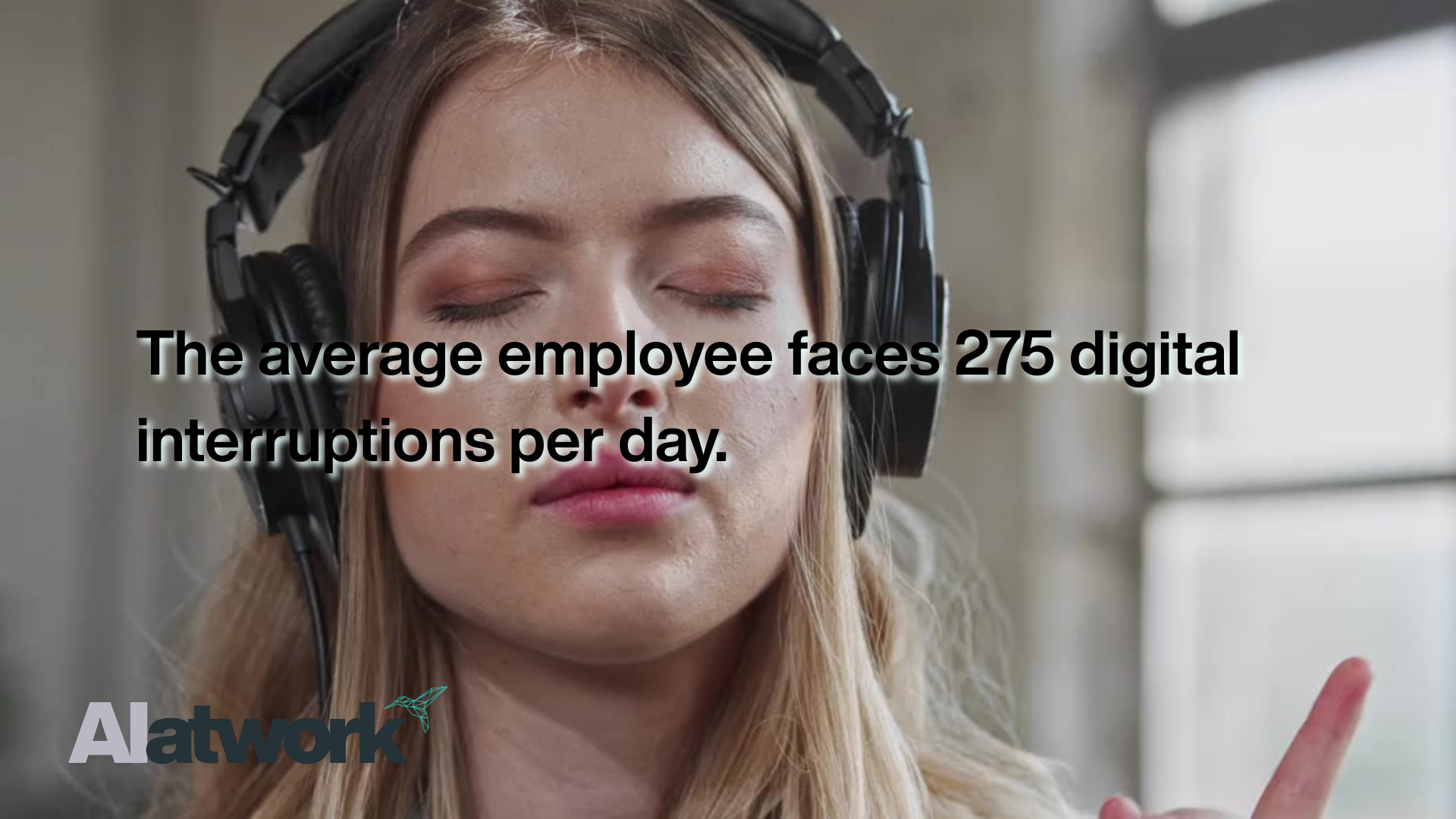
Microsoft's 2025 Work Trend Index found that employees using Microsoft 365 are interrupted every two minutes by a meeting, email, or notification. That adds up to 275 interruptions per day during core work hours. Nearly half of employees say their work feels chaotic and fragmented.

The pattern is familiar: AI handles routine tasks faster. The time saved gets immediately filled with more work. You finish a report in half the time, so now you are expected to write two reports. The tool creates capacity, and the organisation adds workload to match.
The real value is in doing better work with the time reclaimed. Deeper analysis instead of surface-level summaries. Thoughtful client strategy instead of reactive responses. Time to review and refine instead of rushing to meet the deadline.
This only works if expectations reset alongside the tools. If the default assumption is "you can do more now," then AI becomes another way to stay perpetually busy. AI creates space. What gets done with that space is a leadership decision, but most leaders think it is a technology decision.
AI is augmentation, not replacement
The fear that keeps people quiet about AI: it will replace me.
The truth is more nuanced. The World Economic Forum's Future of Jobs Report 2025 surveyed over 1,000 employers representing 14 million workers across 55 economies. Their finding: 170 million new roles will be created by 2030, while 92 million will be displaced. The net result is 78 million new jobs.
The displacement is real. Administrative roles, data entry positions, routine clerical work. These are shrinking. What is growing are roles that combine human judgement with AI capability. Data analysts who understand what patterns mean for business decisions. Customer service specialists who handle complex cases while AI manages routine queries. Engineers who design systems that AI then helps optimise.

AI literacy is becoming as fundamental as digital literacy was 20 years ago. Early adopters are not smarter. They are just less afraid to experiment.
Use-case: what this looks like in practice
A mid-sized wealth management firm in the UAE came to us with a very similar problem. Their advisors spent hours each week preparing client meeting summaries and portfolio updates. A top-level manager spends 4 hours per week just putting a simple report together. They used a mix of Salesforce for client records, an Excel-based reporting system, a separate compliance tracking tool, and email for most handovers between teams. Great tools, all speaking their own language.
The firm had experimented with AI tools privately. Individual advisors used ChatGPT to draft client emails. The compliance team tried standalone summarisation tools. Finance used a separate BI plugin for reporting. Each tool worked in isolation, creating more data silos rather than fewer.
We started by mapping how work moved through the business. Who touched what data, when, and why. This revealed that advisors were spending 40% of their time on administrative preparation rather than client conversations.
We consolidated their client data into HubSpot as a single source of truth, integrating it with their existing finance and compliance systems via API connections. Workflows were redesigned so that when an advisor scheduled a client meeting, the system automatically pulled relevant portfolio data, recent communications, and compliance flags into a pre-meeting brief.
AI was introduced carefully. Client communication summaries were generated automatically, but advisors reviewed and refined them before use. Portfolio insights surfaced within the CRM rather than requiring advisors to switch to external tools. The AI augmented their preparation; it did not replace their judgement.
The result: advisors gained back 12 hours per week. The top-level manager now gets her report in 2 minutes. But the more significant outcome was cultural. Because AI was implemented openly, with clear governance and training, staff adopted it willingly. The private experimentation stopped. Teams began sharing what worked and what did not. Knowledge started compounding. We do not even need to go into the psychological impact on the worker of being able to use tools in confidence and enthusiasm.
The reason we are going on and on about it
The companies that win with AI will not be the ones with the best tools, because change is always on the horizon. But they will be the ones with the best conversations about how to use them, and what can be done.
If everyone is using AI in private, why are we not talking about it openly in leadership meetings? When teams cannot discuss tools openly, they cannot learn from each other. The people succeeding with AI are the ones using it deliberately. They know what to keep, what to change, and what to ignore.
For mid-sized firms without dedicated technology leadership, this presents both a risk and an opportunity. The risk is that AI becomes another source of fragmentation, with different teams using different tools without coordination or governance. The opportunity is that smaller organisations can move faster than enterprises, redesigning workflows before bureaucracy sets in.
Where to start and how to be better
The tools are already in use. Leaders need to take responsibility to learn how to use them well. And that only happens through open conversation. Through shared examples. Through honest discussion about what works and what does not.
This starts with understanding how work really flows through your business today. Where is time being lost? Where are teams switching between disconnected systems? Where could AI create space for better work, rather than just more work?
A workflow audit maps people, processes, and systems, surfaces the top inefficiencies, and provides a clear plan for where technology (including AI) can add genuine value. The goal is not to automate everything. It is to ensure that any automation fits how your team actually works.
Xcelerate Technologies helps mid-sized businesses align their people, processes, and systems. We map how work moves through your organisation, identify where AI and automation can create real efficiency gains, and implement solutions that teams actually adopt.
If you are ready to move from private experimentation to coordinated adoption, contact us to request a workflow audit.
Sources
Gartner Future of Work Trends 2025
McKinsey State of AI 2025
Microsoft Work Trend Index 2025
World Economic Forum Future of Jobs Report 2025